


 中文简体
 English
What Is Rubberwood Furniture? Pros, Cons, Care, and Buying Guide Explained
Posted by Zhejiang Wanchang Furniture Co., Ltd.
Rubberwood furniture is furniture made from the timber of the rubber tree — the same species that produces natural latex for gloves, mattresses, and tires. It is a genuine hardwood, not a composite, and it has quietly become one of the most common materials behind affordable dining sets, bed frames, and accent seating worldwide. If you have ever sat on a pale, finely grained dining chair that felt unexpectedly solid for its price, there is a good chance it was rubberwood.
Because rubberwood sits somewhere between budget and genuinely good, it collects more myths than most woods. Some shoppers dismiss it as particle board with a nicer name; others assume it is a rare tropical timber pulled out of a rainforest. Neither is accurate.
Content
- 1 What Is Rubberwood, Exactly?
- 2 Why Rubberwood Performs So Well in Furniture
- 3 The Advantages and Drawbacks of Rubberwood Furniture
- 4 Is Rubberwood Furniture Sustainable?
- 5 Where You Will Actually Encounter Rubberwood
- 6 How to Care for Rubberwood Furniture
- 7 What to Check Before You Buy
- 8 Quick Answers to Common Questions
What Is Rubberwood, Exactly?
Rubberwood comes from Hevea brasiliensis, commonly called the Pará rubber tree. The species is native to the Amazon basin, but commercial plantations today are concentrated in Southeast Asia — Thailand, Malaysia, Indonesia, Vietnam, and southern China — where the climate suits latex production.
A rubber tree is planted for its sap, not its timber. It begins yielding latex at around six or seven years of age and keeps producing for roughly 25 to 30 years. When output drops and the tree is no longer worth tapping, it is felled and the trunk is sawn into lumber. That single fact explains most of rubberwood's reputation: it is a byproduct of an existing agricultural cycle rather than a tree cut specifically for furniture.
In the trade, the same wood appears under several names — parawood, Hevea, plantation hardwood, and, more confusingly, Malaysian oak or Asian oak. The last two are marketing terms rather than botanical ones. If a label says Malaysian oak, you are almost certainly looking at rubberwood.
Why Rubberwood Performs So Well in Furniture
Rubberwood is a medium-density hardwood with a fine, straight grain and a pale cream to light honey colour. It machines cleanly, glues well, holds screws, and accepts stain, lacquer, and paint evenly — which is why so much of it is finished to resemble oak, walnut, or cherry.
Two practical properties matter most. Once properly kiln-dried, rubberwood is dimensionally stable, so it resists the warping and cracking that trouble softer woods as indoor humidity swings through the year. And it is hard enough to handle daily wear, even if it does not match oak or maple.
| Wood species | Janka hardness (approx.) | Typical furniture use |
|---|---|---|
| Rubberwood | 960 lbf | Dining chairs, bed frames, stools |
| Red oak | 1,210 lbf | Premium tables, cabinets |
| Hard maple | 1,450 lbf | Butcher blocks, heavy-duty tops |
| Eastern white pine | 380 lbf | Painted furniture, shelving |
For a dining chair or a bedside table, that level of hardness is more than enough. Where rubberwood is used as a thin, unsupported surface, it can dent a little more easily than oak, which is one reason you rarely see it in butcher blocks or workbenches.
The Advantages and Drawbacks of Rubberwood Furniture
Rubberwood's strengths are easy to list:
- Real hardwood at an accessible price, rather than a veneer over particle board.
- Predictable stability in heated and air-conditioned rooms once kiln-dried.
- Uniform colour and subtle grain, which makes refinishing and repainting realistic.
- Moderate weight, so pieces stay easy to move without feeling flimsy.
- Reliable supply, because it comes from established plantations rather than wild forest.
The honest limitations are worth knowing too:
- Softer than oak, maple, or teak, so table edges may pick up small dents in a busy home.
- Frequently finger-jointed, which is strong when done well but visible on open edges.
- Plain by nature — usually stained or painted rather than left bare as a feature.
- Freshly sawn timber can carry a faint latex smell that fades once the piece is sealed and aired.
Is Rubberwood Furniture Sustainable?
The case in favour is straightforward. Rubber plantations exist to produce latex, and the trees are felled anyway when their tapping life ends. Turning that timber into furniture keeps carbon stored in the wood instead of releasing it through burning, and most plantations replant on a cycle. That is why rubberwood is often described as environmentally farmed timber.
The counter-argument is about land use rather than the tree itself. Large rubber plantations are monocultures, and in some regions they replaced natural forest, which reduces biodiversity and offers little habitat for wildlife. A plantation is not a forest, even when it looks green from a distance.
In practice, how sustainable a rubberwood piece is comes down to two things: where the timber was grown, and how long the furniture lasts. Traceable supply, combined with furniture built to survive a decade of daily use rather than a season of trends, matters more than the species name on the box.
Where You Will Actually Encounter Rubberwood
Rubberwood is everywhere once you start looking. It is the frame inside a great deal of upholstered seating, the legs under painted dining tables, the slats in bed frames, and the body of countless footstools. Common applications include dining chairs and bar stools, bed frames and children's furniture, ottomans and storage stools, lounge chairs, sofa frames, and even kitchen items such as cutting boards.
In dining seating, rubberwood usually shows up as the legs, the frame, or an exposed backrest, with the seat upholstered in fabric or PU leather. It is a sensible division of labour: the wood carries the load, the cushioning delivers the comfort, and the whole chair stays light enough to pull out one-handed.
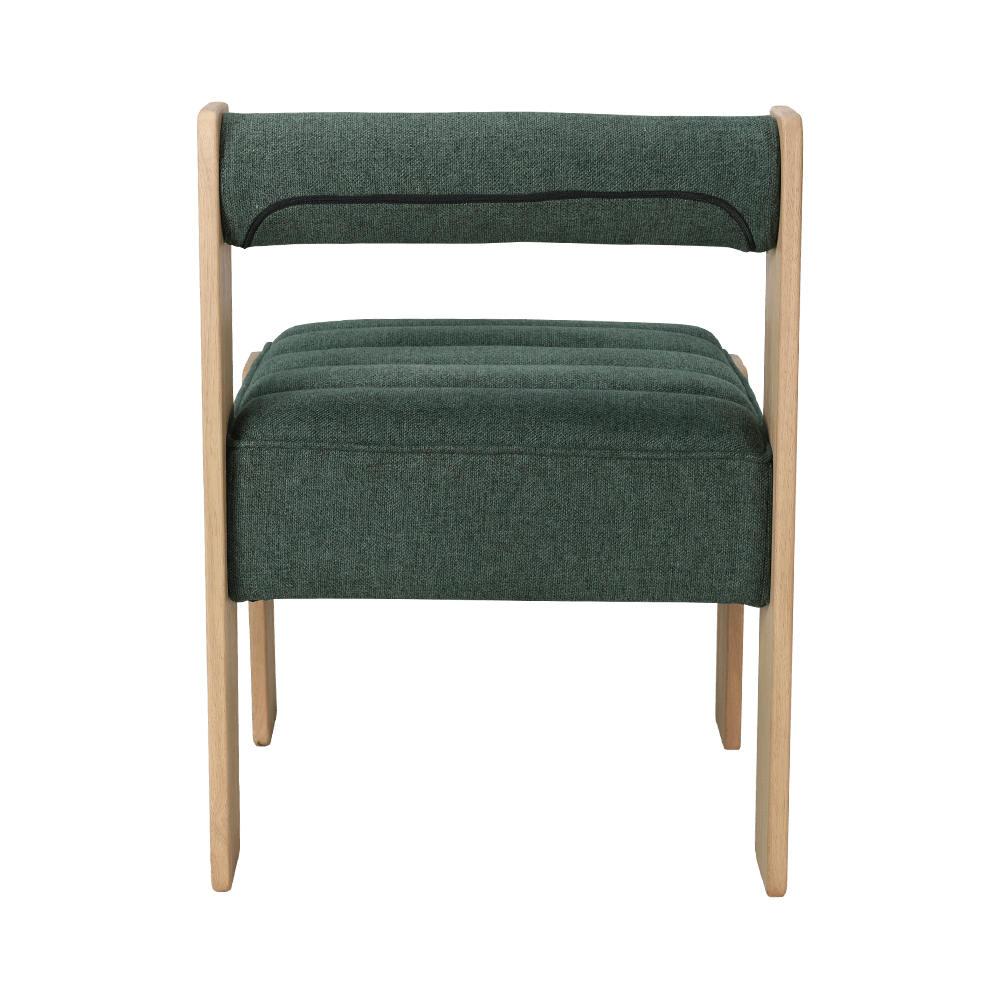 WS6351 Fabric Rubber Wood Dining ChairA rubberwood dining chair with upholstered seat and back, showing how wood structure and padding combine for comfortable dining seating.View Product →
Resting chairs and lounge seating follow the same logic. A rubberwood frame keeps the silhouette clean and the piece stable, while a sponge or spring-pack cushion does the work of making it comfortable for a long evening.
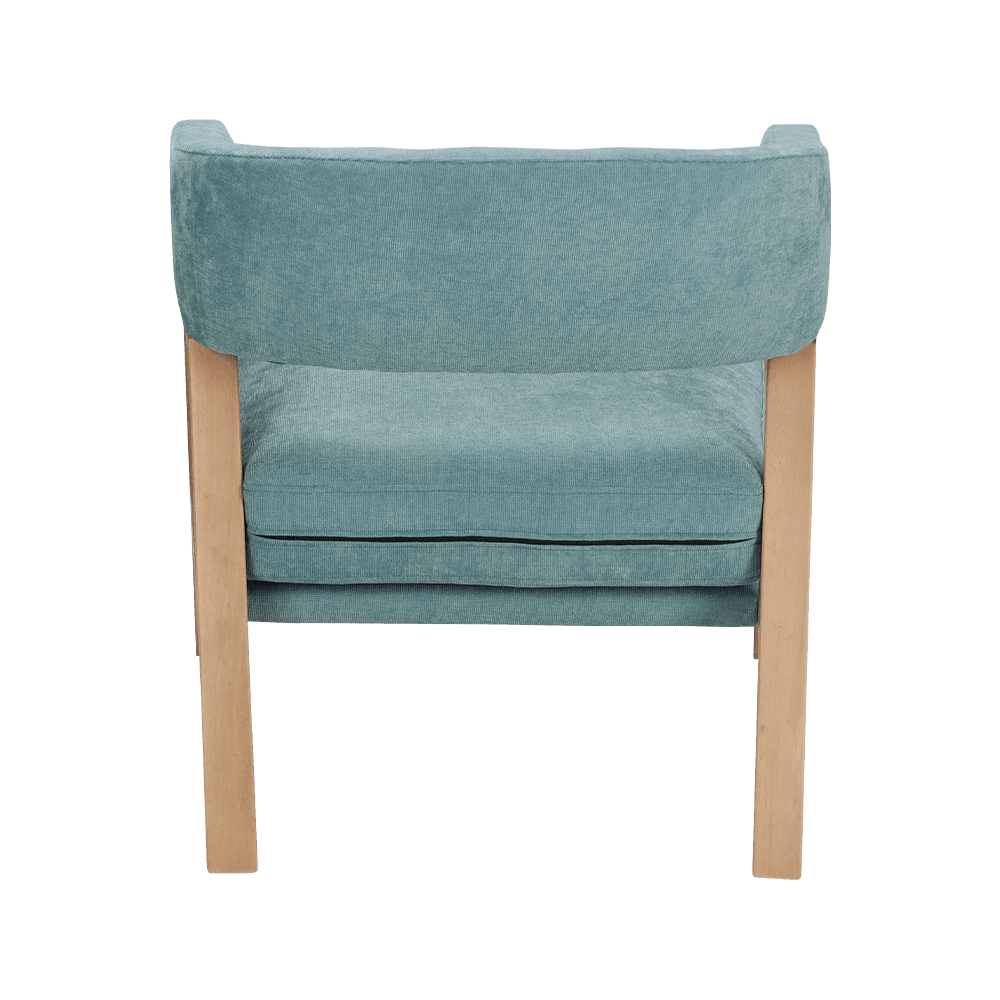 WS6367 Rubber Wood Sponge Cushion Resting ChairA rubberwood lounge chair with high-density sponge cushioning and a slightly reclined back, offering comfort for living room or bedroom resting areas.View Product →
Footstools and ottomans are one of the least glamorous but most practical uses. A rubberwood-legged footrest with a high-resilience sponge top is light, easy to reposition, and often doubles as extra seating when guests arrive.
 Rubberwood Leg Storage Sponge FootrestA rubberwood footstool with a cushioned sponge top and hidden storage, practical for living rooms, bedrooms, or entryways.View Product →
We have been building seating from solid wood and rubberwood since 2005 — dining chairs, bar stools, lounge chairs, sofas, and footstools — from our base in Anji, China, and from our production site in Vietnam.
How to Care for Rubberwood Furniture
Rubberwood is not demanding, but it responds well to a little routine attention:
- Keep indoor humidity roughly between 40 and 60 percent; extreme dryness causes shrinkage.
- Move pieces out of direct sunlight, which can fade stained and painted finishes over time.
- Dust with a soft, slightly damp cloth, then dry immediately rather than leaving water to sit.
- Skip silicone polishes and ammonia-based cleaners, which can dull a lacquered surface.
- Use coasters, placemats, and felt pads under lamps and vases to prevent rings and scratches.
- Re-oil or wax oiled finishes every six to twelve months; wipe painted and lacquered surfaces with mild soapy water.
If you would like a deeper walkthrough, our guide to maintaining solid wood dining chairs covers the same ground in more detail.
What to Check Before You Buy
- Moisture content: kiln-dried timber should sit around 8 to 10 percent, which limits later movement.
- Solid versus veneer: look at the end grain of legs and edges to confirm you are getting solid wood.
- Joinery: mortise-and-tenon or dowelled joints with corner blocks hold up far better than staples and glue alone.
- Stability: a well-made chair feels dense, sits flat, and does not rock when you press down on one corner.
- Finish quality: run a hand along the edges — a smooth, even surface suggests care throughout the build.
Quick Answers to Common Questions
Is rubberwood real wood?
Yes. It is a hardwood from Hevea brasiliensis, the rubber tree. It is not MDF, particle board, or a veneer over softwood, although those materials occasionally appear alongside it in the same piece.
Is rubberwood strong enough for everyday use?
For chairs, tables, beds, and stools, yes. It is softer than oak, so it dents a little more easily, but a well-jointed rubberwood chair will handle years of daily meals without trouble.
Is rubberwood the same as Malaysian oak?
Effectively, yes. Malaysian oak, Asian oak, and parawood are all trade names for the same timber.
Rubberwood furniture is best understood as honest, practical material rather than a compromise. It comes from trees that have already done a job for a quarter of a century, it is stable and workable, and it lets a well-built chair or table reach a price most households can genuinely consider. It will never match oak for hardness or grain drama — but for everyday seating, it remains one of the most sensible choices available, and it deserves better than the dismissal it usually gets.
-
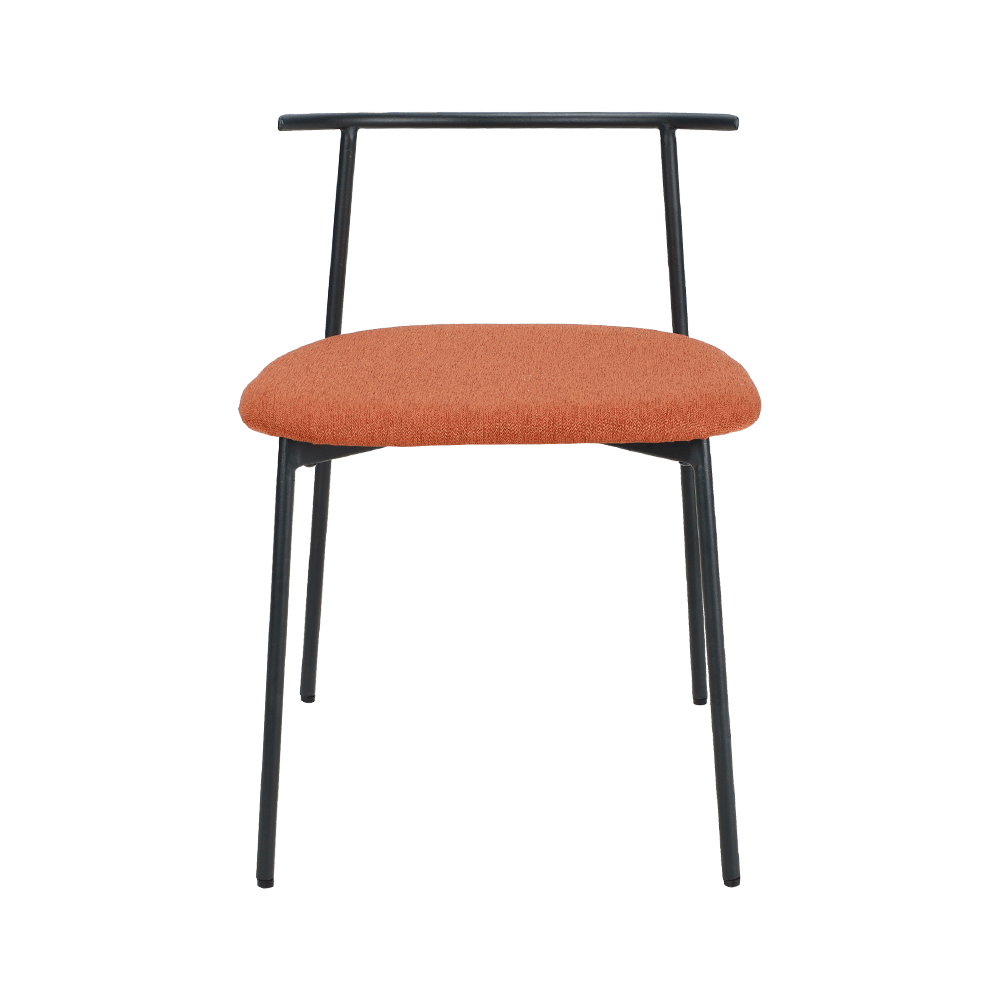
The curved back metal leg dining chair is a blend of modern design and classic comfort, offering an ... -
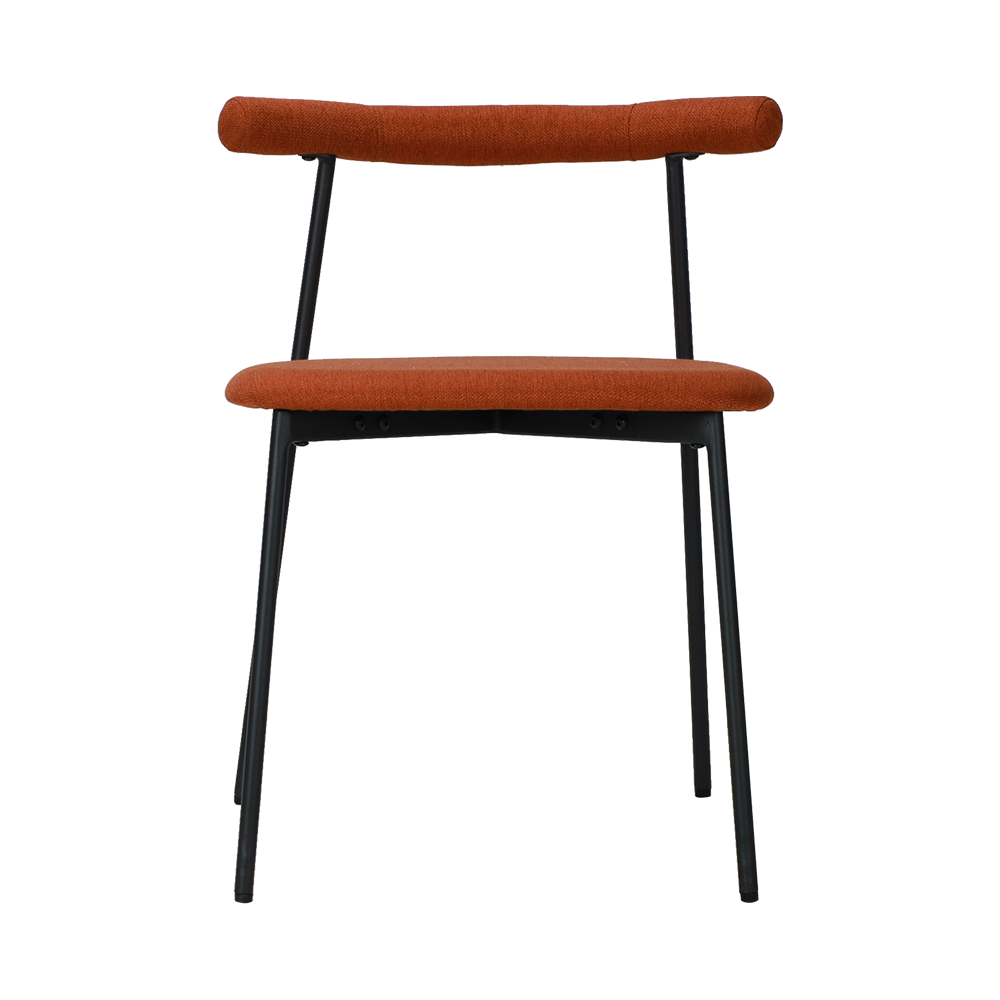
The High Resilience Sponge Cushion Metal Foot Dining Chair offers a blend of comfort, style, and dur... -
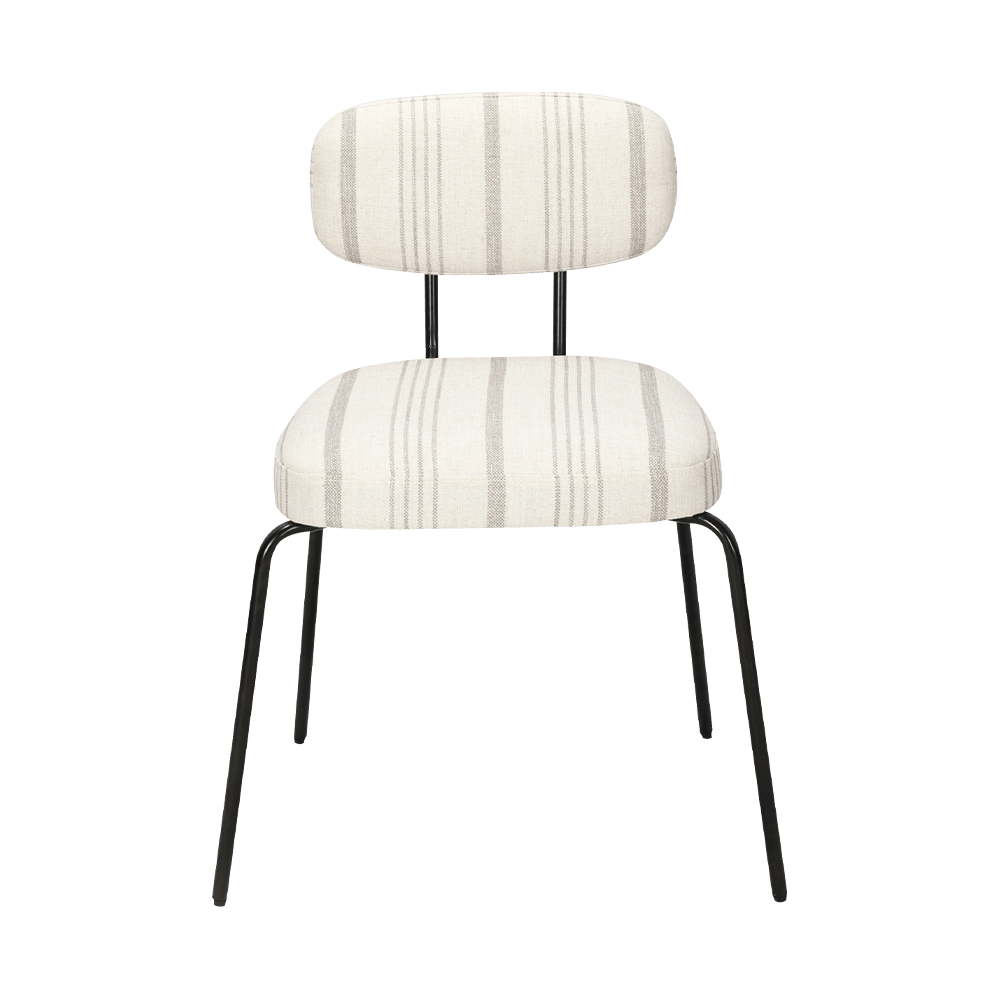
This WS6357 white modern metal dining chair features a simple and elegant design, paired with metal ... -
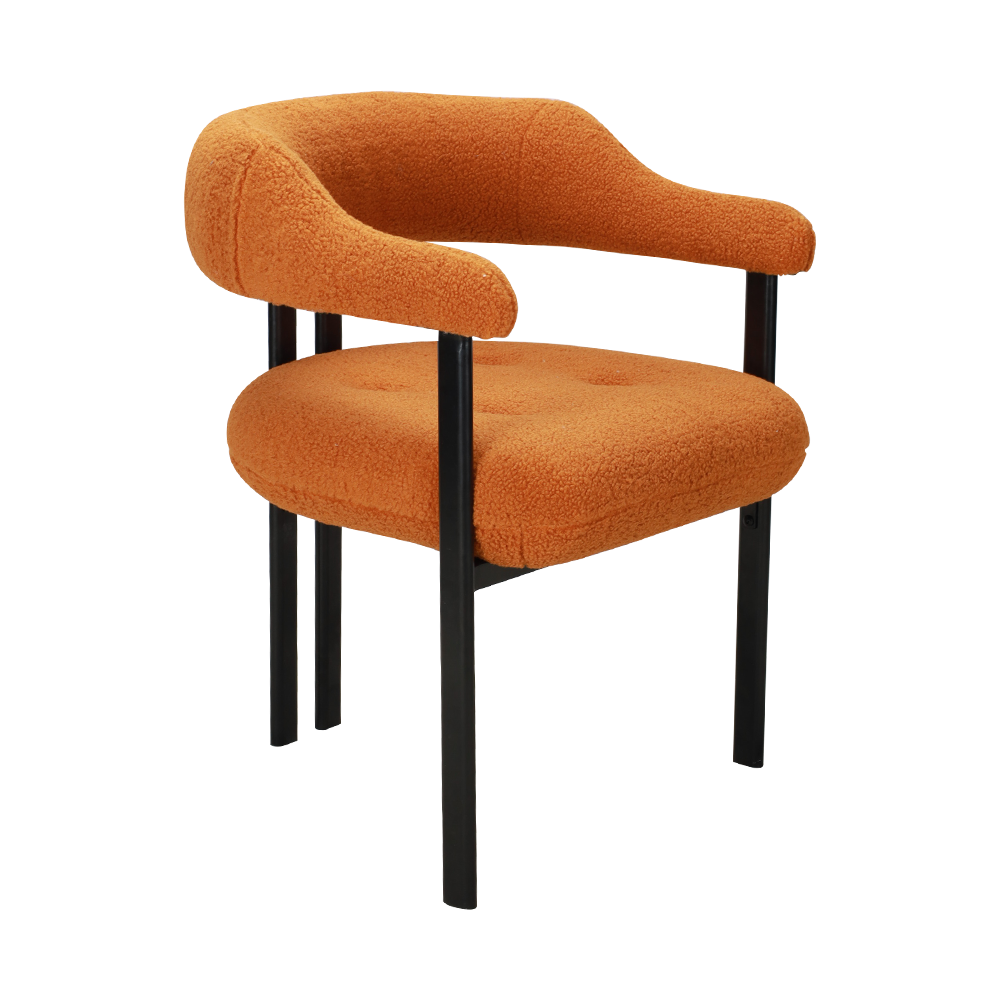
Elevate your dining experience with our WS6353 metal dining chair with a fabric cushion, a blend of ... -
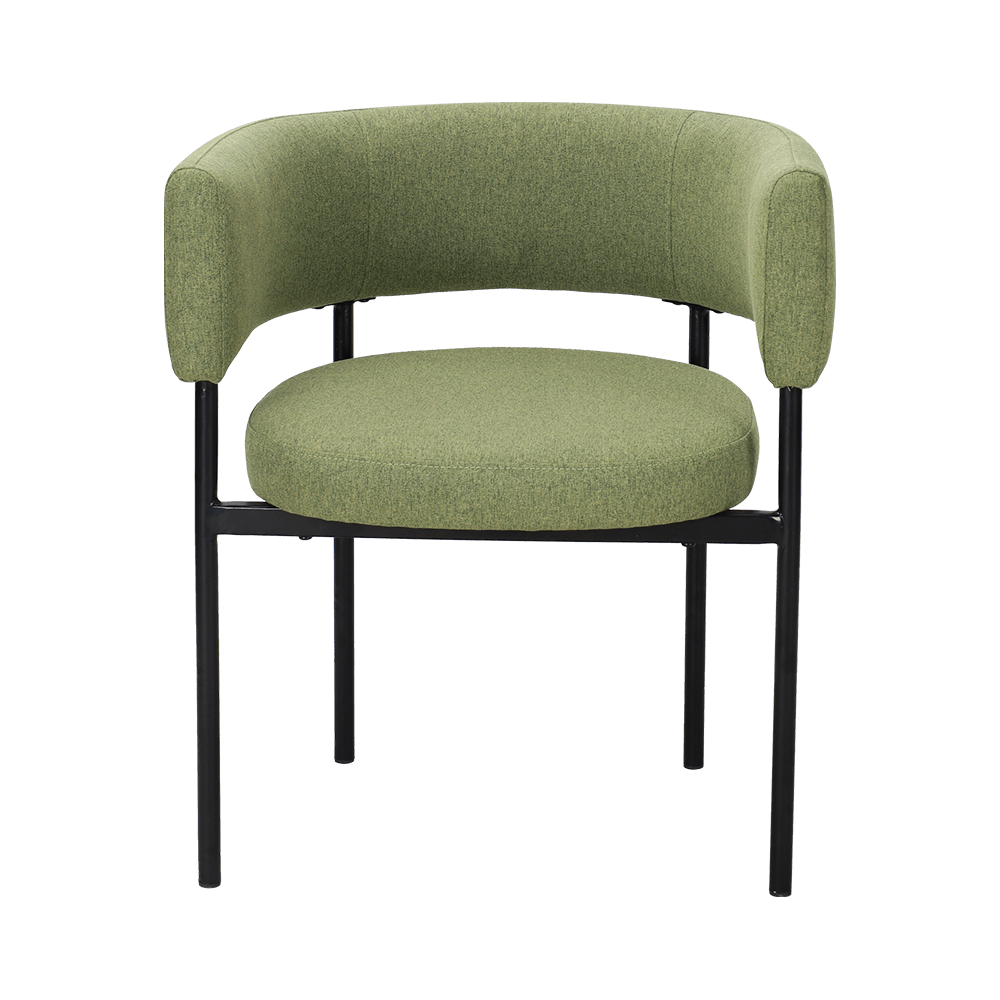
Crafted for both style and functionality, the WS6354 acid green metal leg dining chair features a st... -
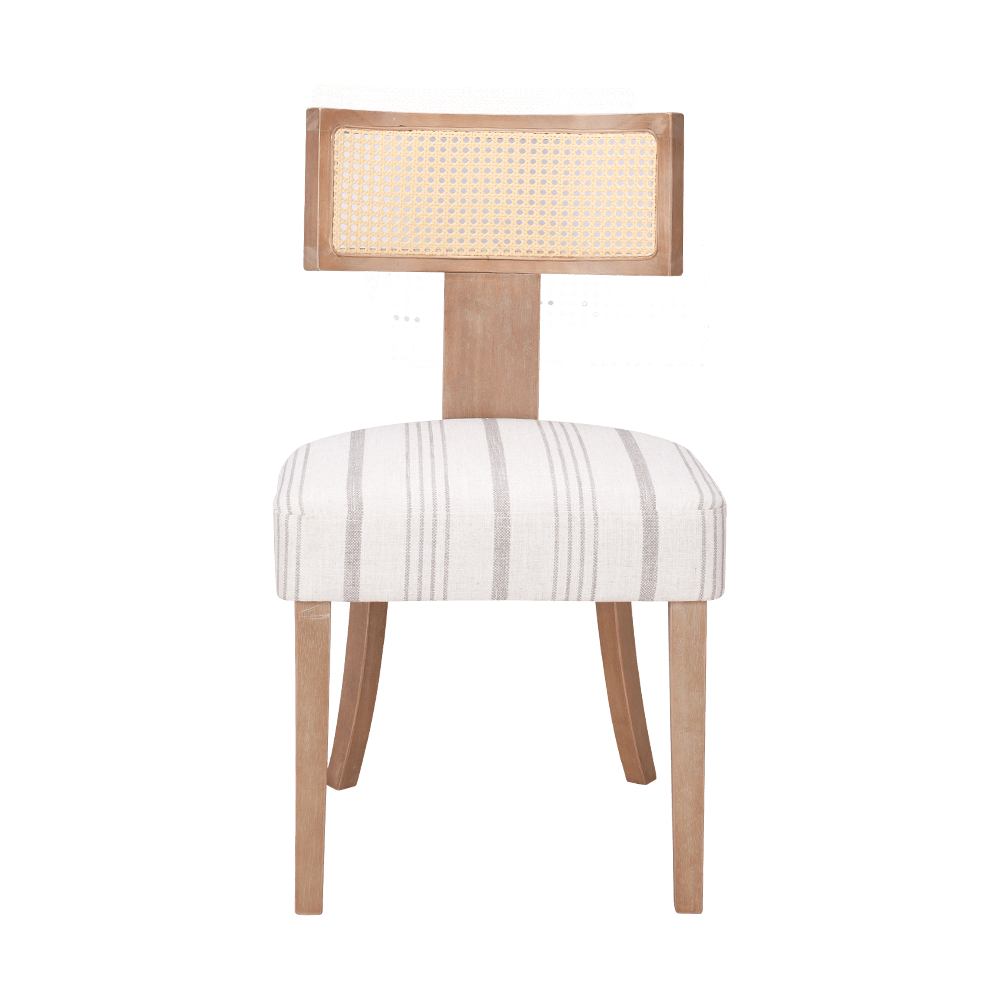
This solid rubber wood dining chair combines natural texture with comfort, featuring a simple yet el... -
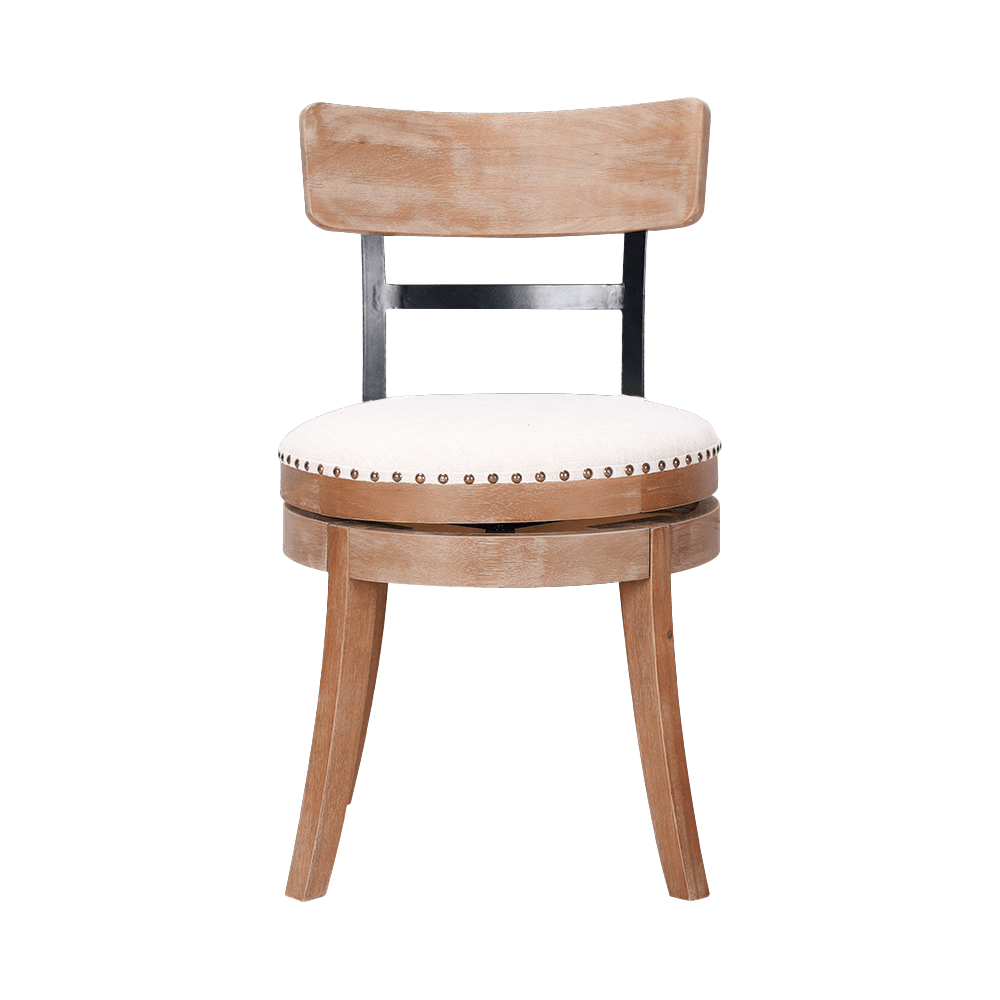
This WS6347 Round Cushion Solid Wood Dining Chair blends comfort with minimalist design, fitting var...

Copyright © Zhejiang Wanchang Furniture Co., Ltd.All Rights Reserved.
Indoor Fabric Sofa Manufacturers

-
 Xucunwancun, Xilong Xiang, Anji County, Zhejiang Province, China
-
 [email protected]
Mobile Site

WeChat Subscription Acount

Copyright © 2024Zhejiang Wanchang Furniture Co., Ltd.
All Rights Reserved.
